Most visitors to Phuket spend their time along the coastline. The beaches, the beach clubs, the coastal restaurants, the boat trips departing from the western shore. This is the Phuket that most people come for, and it delivers what it promises. But there is another side of the island that sits quietly in the north, in a district called Thalang, that predates Phuket’s reputation as a beach destination by centuries and tells a considerably more layered story about what the island actually is.
Wat Phra Thong is the reason most people who find their way to Thalang make the journey. It is one of Phuket’s most genuinely distinctive cultural landmarks, known across the island and well beyond it for a golden Buddha image that has never been fully excavated, a legend that has never been satisfactorily explained, and an atmosphere that stays with visitors long after they have left. Guests staying in luxury villas in Phuket who take the time to visit consistently describe it as one of the most unexpected and memorable experiences of their stay, and the description is not difficult to understand once you have been there.
The Legend Behind the Image
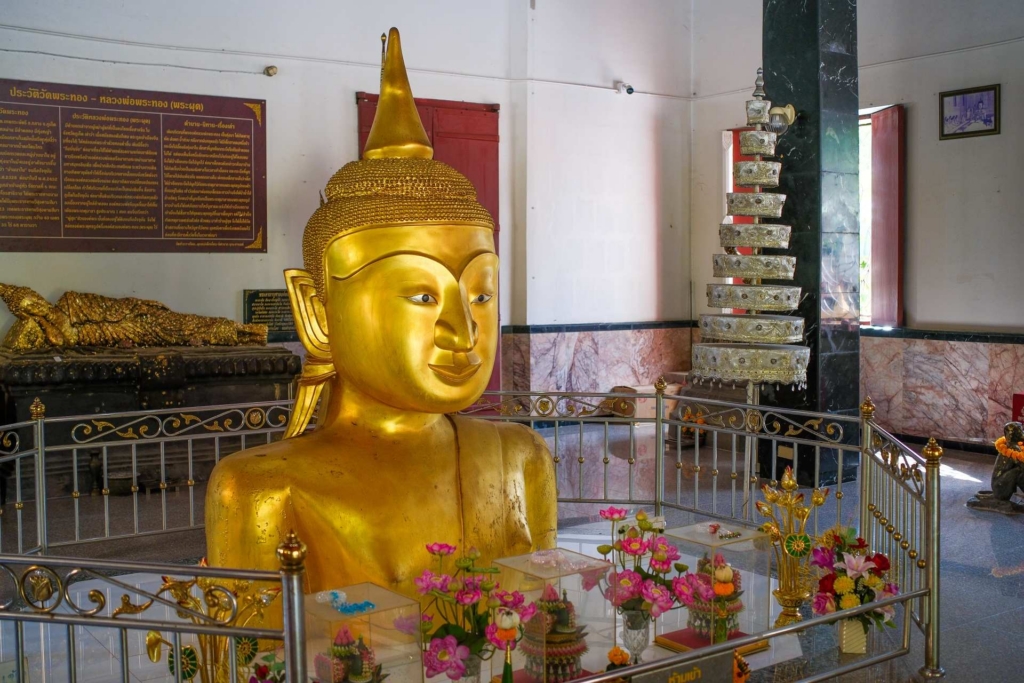
The most famous feature of Wat Phra Thong is immediately visible upon entering the temple. A golden Buddha image rises from the ground, its upper body emerging from the earth while its lower half remains beneath the surface. The image has been there for as long as local memory extends, and no one has ever succeeded in removing it.
The legend most commonly associated with the image begins with a young boy who stopped to rest near the site and tied his buffalo to what he assumed was a post protruding from the ground. The boy fell gravely ill shortly afterward, and when his family investigated the cause, they discovered that the post was in fact the topknot of a buried Buddha image. News of the discovery spread, and attempts were made to excavate the image fully. None succeeded. The Burmese, who occupied Phuket during periods of regional conflict, reportedly attempted to unearth the image during their time on the island and were similarly unable to do so. According to the accounts that have been passed down, those who tried to remove the image were met with misfortune, and the attempts were eventually abandoned.
The gold leaf applied by devotees over generations has given the surface a texture that feels accumulated rather than applied, the result of countless individual acts of reverence that have built up over time into something genuinely striking.
The spiritual significance of the image is evident in the people who visit. Wat Phra Thong draws local worshippers consistently, not just curious travelers, and the quality of attention in the temple reflects that. This is a place that matters to the people who live near it, which gives the experience of visiting a different character from a site that exists primarily for tourism.
What the Temple and Its Surroundings Reveal About Phuket
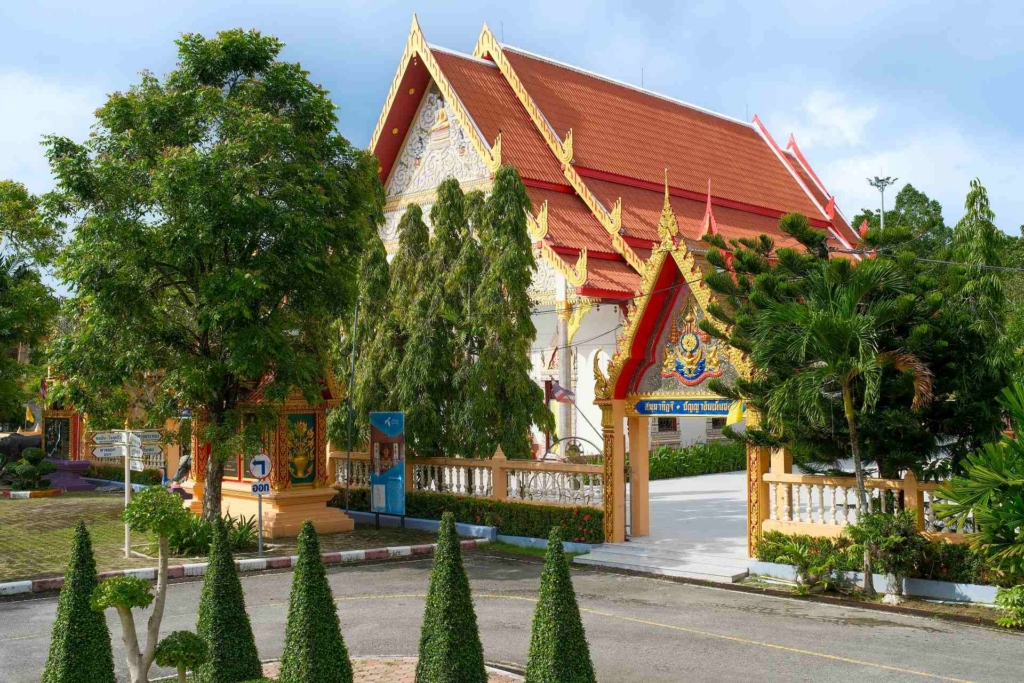
The temple itself is only part of what Wat Phra Thong has to offer. The complex includes a small museum that most visitors overlook entirely, which is a significant oversight. The museum contains artifacts from Phuket’s tin-mining era and its Peranakan heritage, the cultural identity that emerged from centuries of trade and migration between southern Thailand, China, and the Malay Peninsula. These objects tell a story about the island that its beaches and beach clubs do not, a story of economic ambition, cultural exchange, and the layered identity that makes Phuket genuinely interesting to anyone willing to look past its coastline.
The Thalang area surrounding the temple is one of the most historically significant parts of Phuket. The Thalang National Museum sits nearby, as do other landmarks connected to the periods of Burmese conflict that shaped the island’s history in ways that are still visible in its architecture, its festivals, and its cultural traditions. Spending a morning in this part of Phuket produces a very different understanding of the island from the one available along the west coast, and that understanding enriches the experience of a longer stay in ways that are difficult to anticipate in advance.
The atmosphere at Wat Phra Thong is notably quieter than at Wat Chalong, the temple that most visitors to Phuket are directed toward. That relative quiet is not a sign of lesser significance. It is simply what the site is like. The combination of legend, historical depth, and unhurried atmosphere makes Wat Phra Thong a more rewarding visit than its modest exterior might lead a first-time visitor to expect.
Who Will Get the Most Out of a Visit
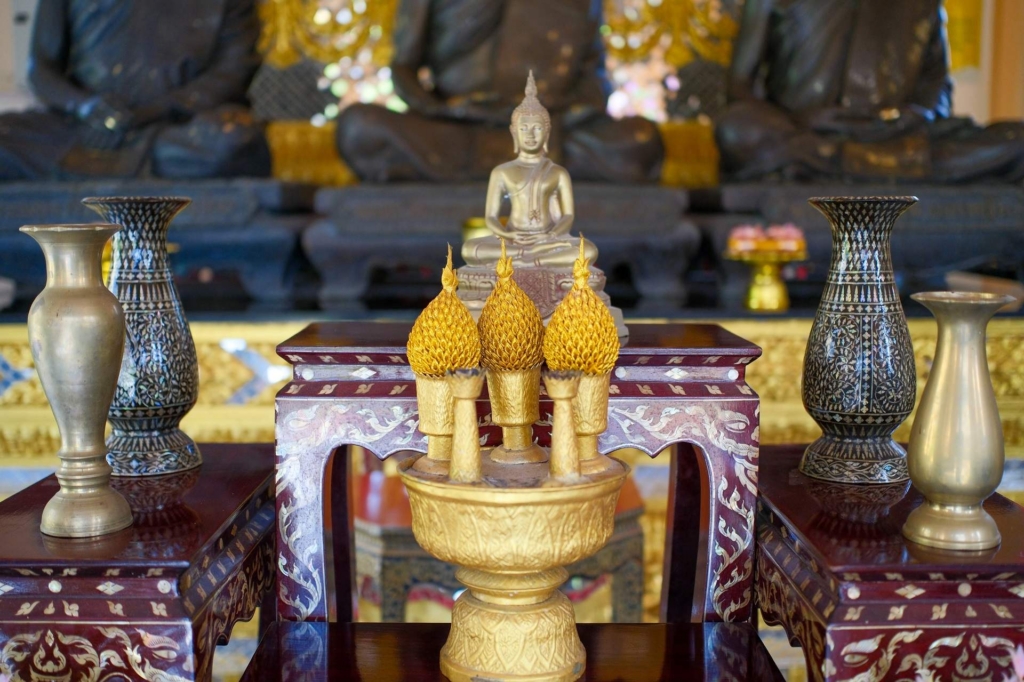
Wat Phra Thong rewards guests who are curious about the island beyond its coastline. Whether that curiosity is about the legend itself, the history of the Thalang district, or simply the desire to experience a side of Phuket that most visitors never reach, the temple delivers something genuinely different from anything available along the west coast.
It works particularly well for repeat visitors who have already explored the more obvious highlights and are looking for something with more depth and a different kind of atmosphere.
The temple pairs naturally with a broader morning in the Thalang area. The national museum is close enough to visit in the same outing, and the surrounding district offers a glimpse of a more locally inhabited Phuket that feels quite different from the commercial stretches of the west coast. Guests staying in luxury villas in the Cherng Talay and Laguna areas are particularly well positioned for this kind of excursion. Thalang sits to the northeast of both areas, accessible without a significant drive, and a morning spent there is easily combined with other plans for the day.
A few practical notes before visiting. Modest dress is expected at the temple, as it is at most Buddhist sites in Thailand, so covered shoulders and knees are worth planning for. Monkeys are a familiar presence around the temple grounds, which adds an unexpected and memorable dimension to the visit. The goal is not to see Wat Phra Thong quickly and move on. The goal is to spend enough time there to let the place register, to read the legend, to look at the image, to walk through the museum, and to leave with a sense of the island that was not available before the visit.
Why Wat Phra Thong Is Worth the Detour
Most of Phuket’s visitor experiences are oriented toward the present. The beaches, the sunsets, the dining, the water. These are pleasures that exist in the moment and are worth having. Wat Phra Thong offers something different. It is a place where the past is still visible and the questions it raises have never been answered, which gives the experience a quality that is genuinely rare in a destination as developed as Phuket. Guests who make the effort to visit consistently describe it as one of the most memorable parts of their stay, often in contrast to experiences that were more obviously spectacular but less lasting in impression. The most rewarding discoveries in travel tend to be the ones that require a little intention to find. Wat Phra Thong is exactly that kind of place, and it offers a version of Phuket that most visitors leave without ever knowing existed.

Juancho leads marketing and content at The Luxury Signature, approaching his work with the same insatiable curiosity that drives his research and his pursuit of new experiences, and occasionally shares that expertise here as well.