Thailand is often celebrated for its beaches, temples, cuisine, and legendary hospitality. Yet one of the most revealing expressions of the country’s cultural identity lies far beyond the Thailand most visitors know.
Every October, for nine extraordinary days, towns and cities across the country are transformed by fire, ritual, devotion, and spectacle. This is Thailand’s Vegetarian Festival, and for the uninitiated, very little can prepare you for what you are about to witness.Thailand is known for many things. Its beaches, its temples, its food, its hospitality. But the event that reveals the most about the country’s layered cultural identity is none of these. It arrives every October, transforms towns and cities across the country for nine days, and leaves most first-time witnesses genuinely unprepared for what they have just seen.
The Vegetarian Festival is unlike anything else Thailand produces at any other time of year. It is not a performance staged for visitors. It is not a cultural showcase or a tourism event. It is one of the most vibrant festivals with intense expressions of spiritual devotion in Southeast Asia, rooted in a tradition that most people traveling through Thailand know nothing about, and it has been happening here for well over a century.
Where It Comes From and Why It Resonates Across Thailand
A traveling Chinese opera troupe fell gravely ill while performing in what is now southern Thailand. Seeking recovery, the troupe observed a strict vegetarian diet and a period of intense spiritual purification dedicated to the Nine Emperor Gods of the Taoist tradition. They recovered, and the practice became the foundation of a festival that has grown across the country ever since.
The ninth lunar month of the Chinese calendar is the period during which these gods are believed to descend to earth, and the nine days of observance are both a welcome and a period of purification for those who participate. Strict vegetarianism, white clothing, and abstention from alcohol and meat are maintained by devotees throughout.
The Hokkien Chinese communities that established themselves across Thailand brought this tradition with them, and it took root most visibly in places where those communities remained large and cohesive. Phuket hosts the most internationally recognized version of the festival, but similar observances take place across the country, from Bangkok’s Chinatown to Koh Samui, Trang, and Krabi. To understand the festival is to understand something about the Chinese roots that run through much of southern Thai culture in ways that the beaches and resorts never reveal.
What the Nine Days Actually Look Like
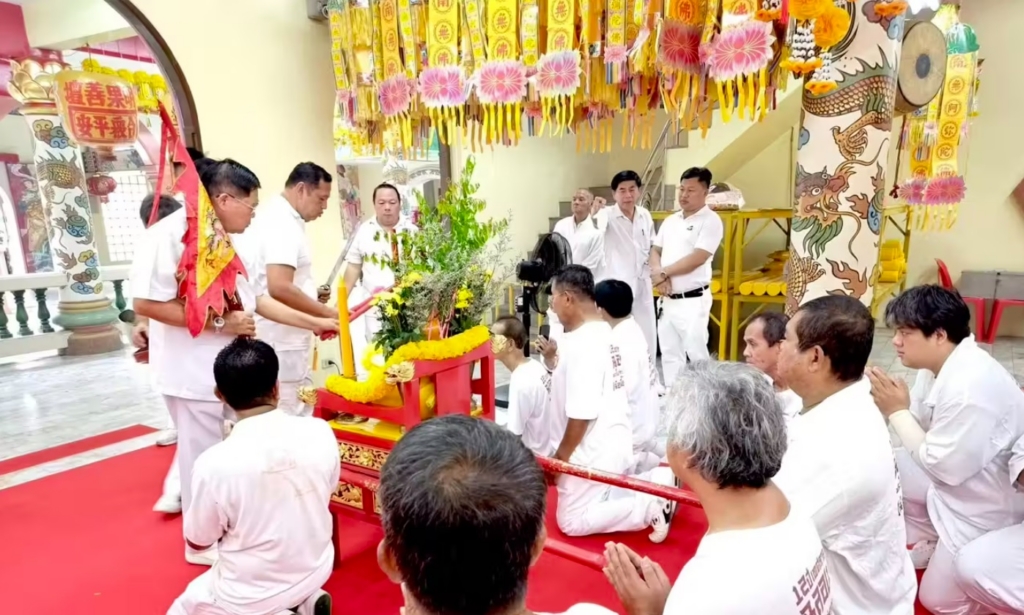
The festival begins at Chinese shrines, where a tall bamboo pole is raised to welcome the Nine Emperor Gods. From that moment, the atmosphere shifts.
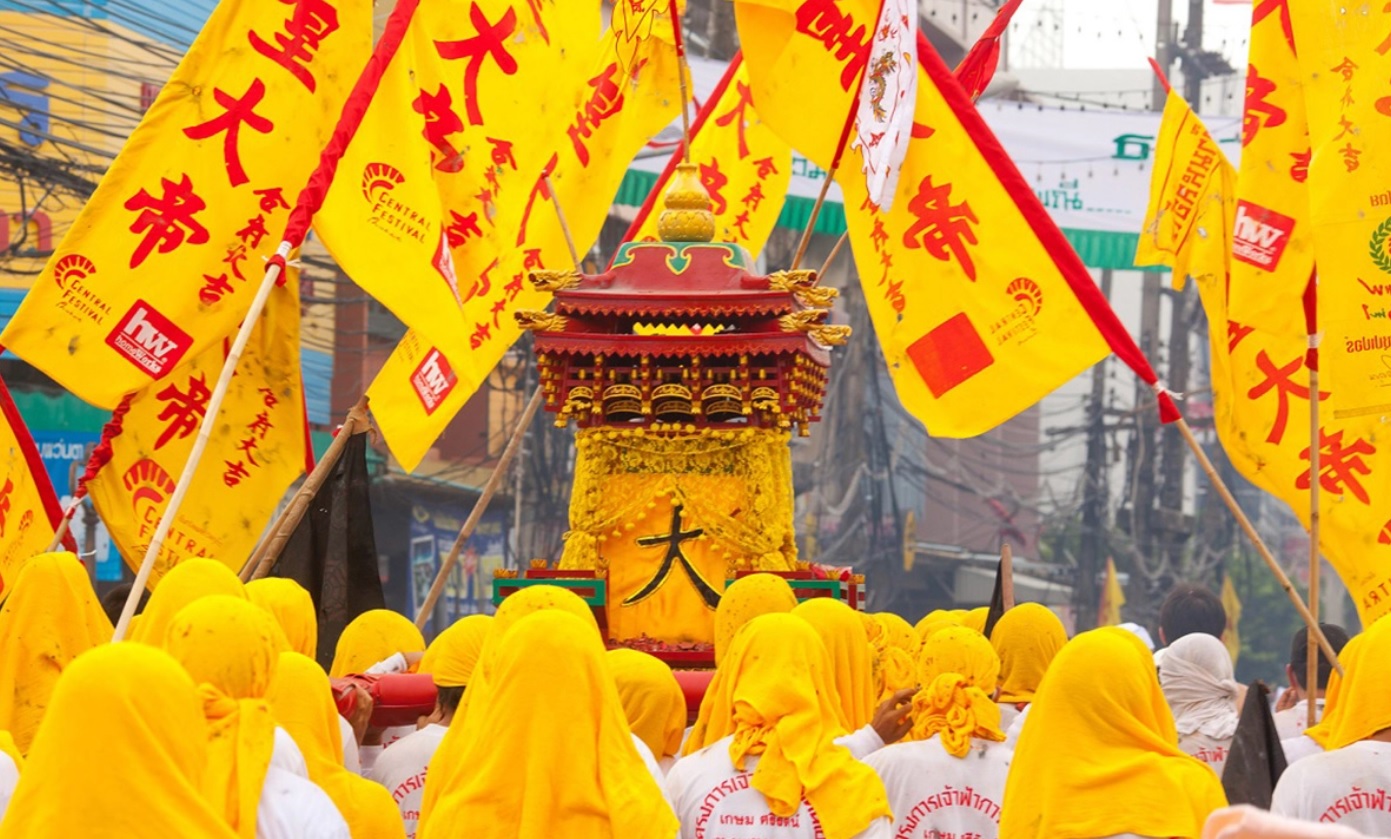
For nine days, devotees dressed in white move through the streets in processions filled with drums, cymbals, and firecrackers. The noise is intense, the energy immediate, and for first-time visitors, often overwhelming.
The most striking rituals are the piercings. Devotees in spiritual trance pierce their cheeks, tongues, and bodies with skewers, swords, and other objects, protected, according to belief, by the gods they embody. These are not performances for spectators, but acts of devotion, and they are best witnessed with respect for the meaning they hold within the community.
What the Festival Feels Like From the Street
The atmosphere in a Thai town during the festival is difficult to describe accurately without having experienced it. The smell of incense and firecrackers lingers constantly. Yellow flags outside restaurants and food stalls signal vegetarian food prepared according to the festival’s standards, and during the nine days these options become both abundant and genuinely worth seeking out. The sound of drums and cymbals announces a procession from a distance, and the crowd that forms around it is a mixture of devotees, local residents going about their day, and visitors who have come specifically to witness what happens.
Guests based in villa areas will generally need to make a deliberate trip to experience the processions. The most intense activity happens in the early morning hours before the crowds peak, which is the best time to arrive.
Tourists Planning a Visit Around the Festival
The festival follows the lunar calendar, so dates shift from year to year. Anyone travelling to Thailand in October should confirm the exact dates before arrival. In Phuket, the observance is centered largely around Phuket Town, while visitors elsewhere can also experience it in Bangkok’s Chinatown, Koh Samui, Trang, Krabi, and other areas with strong Chinese communities.
For guests staying in private villas in Phuket or holiday rentals in Koh Samui, it is worth planning the festival as part of the day rather than as a single stop. Processions and ceremonies can unfold over several hours, so having the flexibility to leave early, return to rest, and head out again later can make the experience feel far more relaxed.
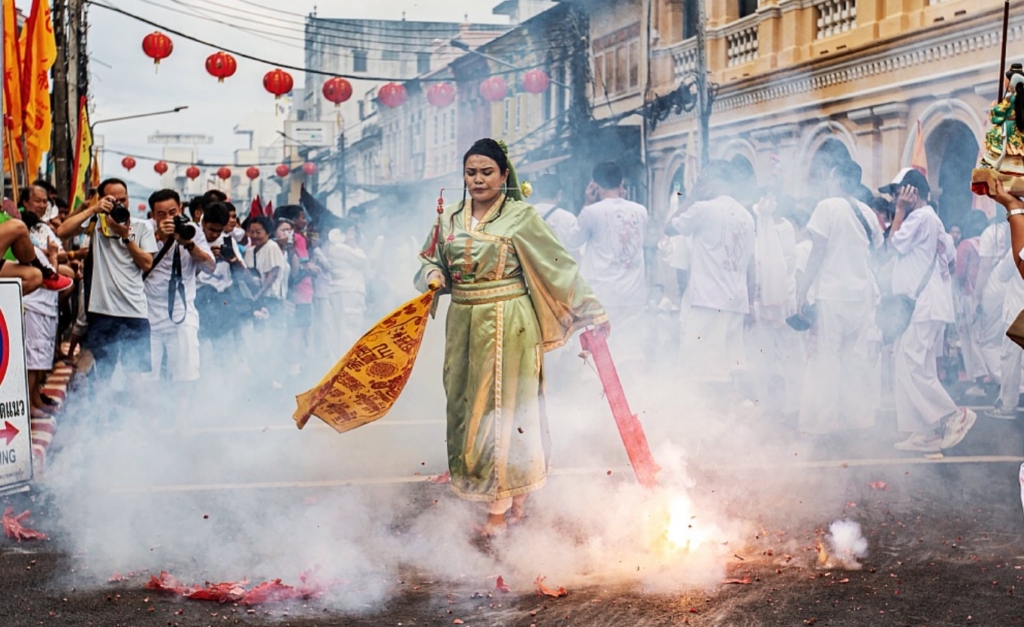
Modest dress and respectful behavior are expected near shrines and during processions. White or light-colored clothing is widely worn during the festival and reflects its emphasis on purification. Visitors may also wish to avoid black clothing when entering shrine areas.
For visitors who are sensitive to graphic imagery, some processions include piercing rituals. For those comfortable witnessing them, the festival offers one of the region’s most distinctive cultural experiences.
Why the Festival Changes the Way You See Thailand
Most visitors to Thailand leave with an impression shaped by its coastline, temples, and food. These are real and rewarding parts of what Thailand is. But they are not the whole picture.
The Vegetarian Festival is one of the clearest expressions of a cultural identity that runs deeper than the surface most tourists encounter. The Chinese communities that shaped so much of southern Thai life, the Taoist traditions they carried across generations, the devotion that fills the streets of these towns every October without any audience in mind, these are the things that reveal what Thailand actually is beneath its reputation as a destination. Guests who take the time to witness the festival tend to leave with a different understanding of the country than those who do not. Not a more complicated one. A more complete one.
–
Featured Image by Vegetarian Festival Procession – thailand.go.th