Trying Thai food for the first time can feel like stepping into something lively and unfamiliar. The smells are bold, the menu may seem confusing, and many people assume every dish will be very spicy. Yet discovering Thai cuisine is not about picking dishes at random. It is about learning the meaning of balance. While heat often gets the most attention, in Thailand spice is only one part of a much bigger story. At its heart, Thai cooking is built on carefully balanced flavor profiles that bring together sweet, sour, salty, spicy, and sometimes a gentle hint of bitterness. No single taste is meant to stand alone. Each one supports the other to create food that feels complete and deeply satisfying.
This sense of balance comes to life through simple but thoughtful ingredients. Fresh herbs like lemongrass, galangal, and lime leaves add brightness and fragrance. Fish sauce gives saltiness, coconut milk brings smooth richness, tamarind offers light tang, and Thai chilies add warmth and fire. When blended with care, these elements create layers of flavor that unfold with every bite. As we guide people through these tastes, we follow the same rhythm that Thailand shares with the world, one layer at a time. A meal becomes more than a collection of dishes. It becomes a journey that slowly reveals the harmony and spirit of the Thai table.
The First Taste Dishes That Welcome You In
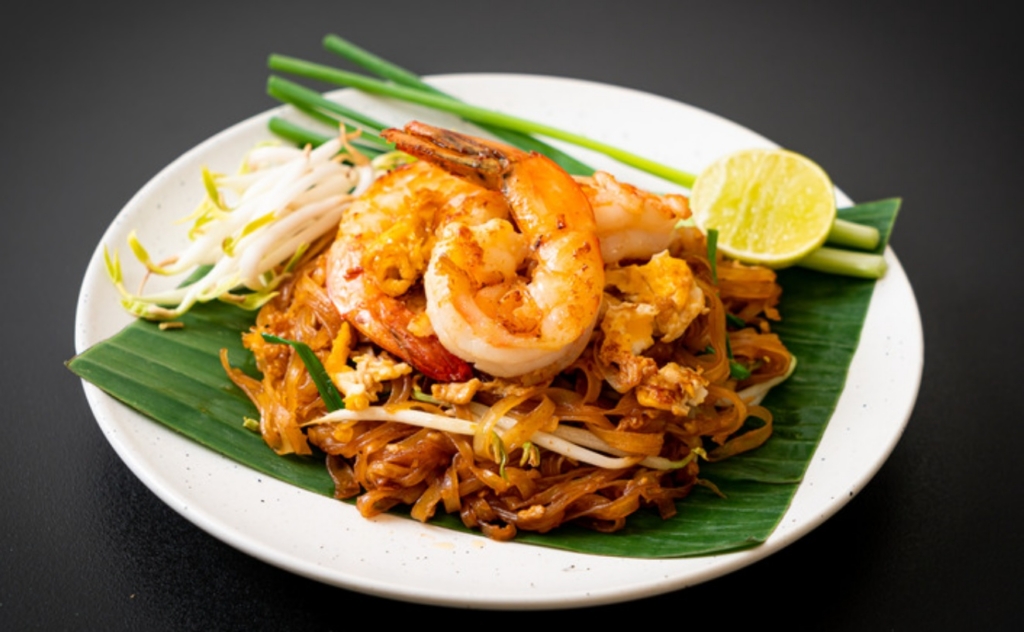
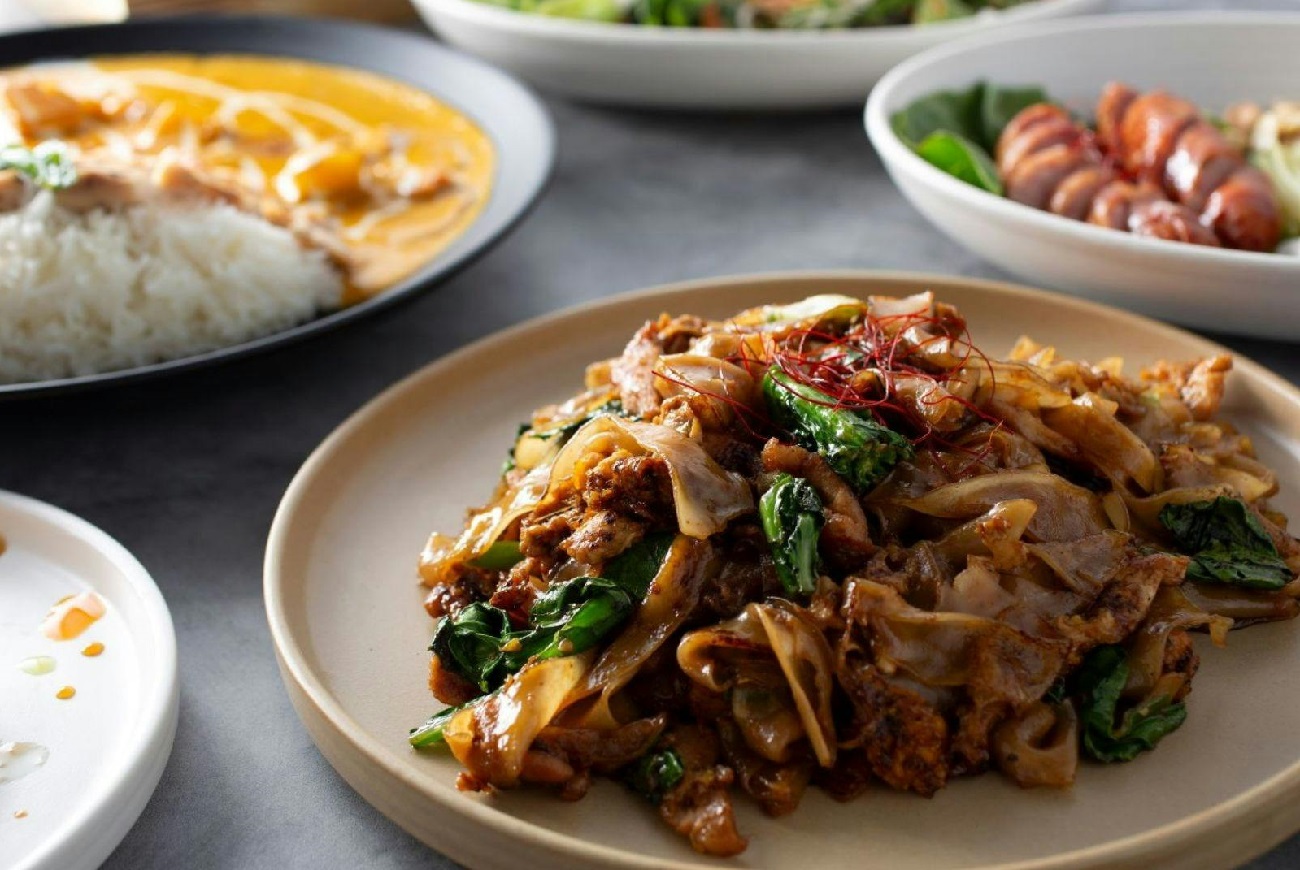
When we introduce someone to Thai cuisine, we often begin with Pad Thai. It is a familiar favorite and an easy first step into the world of Thai flavors. In one simple stir fry, it shows the balance that defines the Thai table. Soft rice noodles are cooked with tamarind, fish sauce, and palm sugar, creating a mix that is sweet, sour, and salty all at once. The noodles are tossed with egg, tofu, and shrimp, then topped with lime, peanuts, and bean sprouts. Each extra squeeze of lime or sprinkle of nuts lets you adjust the flavor to your liking. It is comforting, flavorful, and a gentle way to begin.
From there, we move to something brighter and bolder with Tom Yum Goong. This hot and sour shrimp soup fills the air with the scent of lemongrass, galangal, and lime leaves as it simmers. The first sip is sharp and lively from lime and chili, then softened by fish sauce and the natural sweetness of shrimp. It wakes up the senses and shows how different tastes can work together in one bowl. To complete these first discoveries, we turn to Massaman Curry. With its mild heat, tender meat, potatoes, and peanuts, it feels warm and hearty. Its blend of spices reflects the history of Thailand and the many influences that have shaped its food, while still tasting deeply local and loved.
The Dishes That Define Thai Comfort
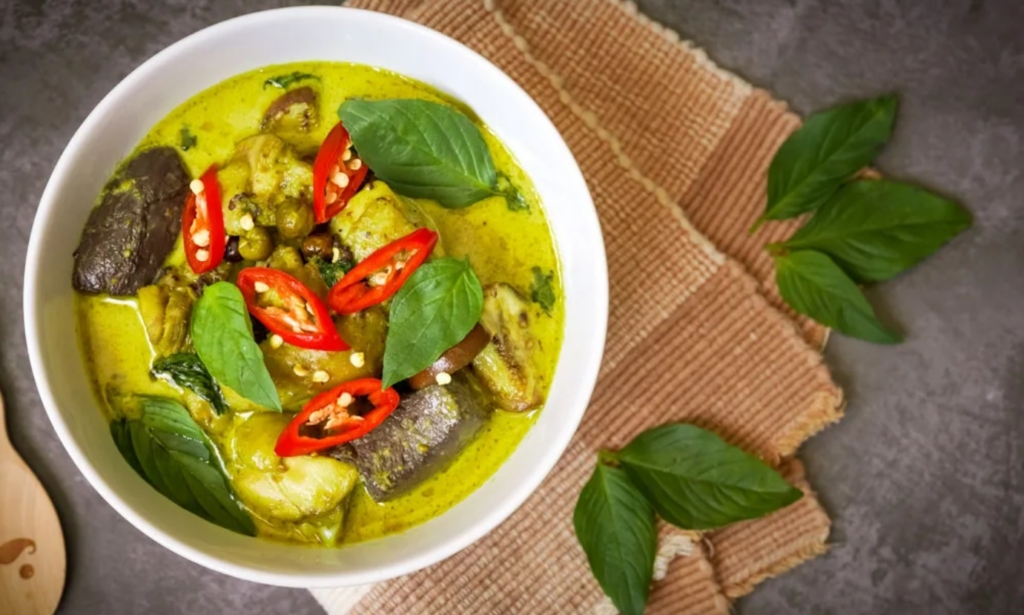
As we explore further, we come to the dishes that define Thai comfort food, meals that feel like home no matter where they are enjoyed. Among them, Green Curry stands out. Known in Thailand as Gaeng Keow Wan, it is loved for its rich coconut milk and gentle sweetness that comes not from sugar but from its creamy base. The green color comes from fresh green chilies blended with herbs and spices, then slowly cooked before coconut milk is added. The result is a curry that can be spicy, yet smooth and balanced. Pieces of meat, small Thai eggplants, and tender vegetables soak in the sauce, while fresh basil adds a fragrant finish. It is a dish that shows how Thailand turns bold flavors into something warm and comforting.
To balance the richness of curry, we turn to Som Tam, the green papaya salad from the northeast of Thailand. This bright and lively dish is made by gently pounding shredded papaya with garlic, chilies, long beans, and tomatoes so they absorb a dressing of lime juice, fish sauce, and palm sugar. The taste is fresh, tangy, and slightly sweet, offering a crisp contrast to creamy curries and rice. Som Tam refreshes the palate and keeps the meal feeling light and balanced. Together, these dishes show how Thai cuisine blends richness and brightness, creating meals meant to be shared and enjoyed in good company.
The Dishes That Bring Everyone Together
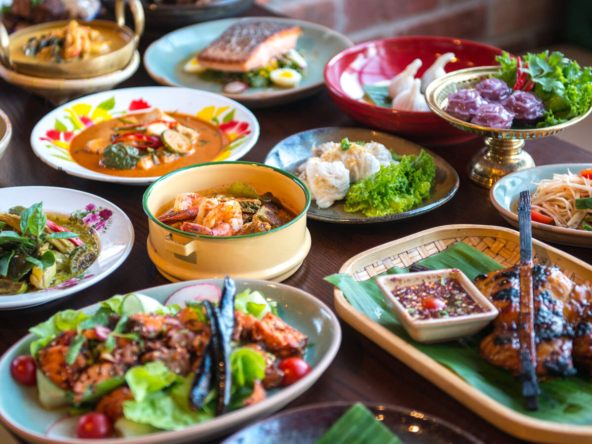
Thai dining is fundamentally communal. It is an act of connection, where dishes are placed in the center of the table for everyone to share. Among the most essential communal staples is Thai Fried Rice, or Khao Pad. While it might seem simple, its role is vital. Unlike the greasy, soy-heavy versions of fried rice found elsewhere, Thai fried rice is understated and clean. We use jasmine rice, known for its floral aroma, and stir-fry it with minimal seasoning usually just a touch of light soy sauce and sugar allowing the flavors of the accompanying dishes to shine.
Khao Pad is highly adaptable, often served with a side of prik nam pla (fish sauce with chopped chilies), which allows each person to customize the salt and heat levels. It serves as the foundation of the meal, a reliable anchor that ties the more complex curries and salads together. It is the dish that ensures everyone at the table, regardless of their spice tolerance, finds something satisfying and familiar.
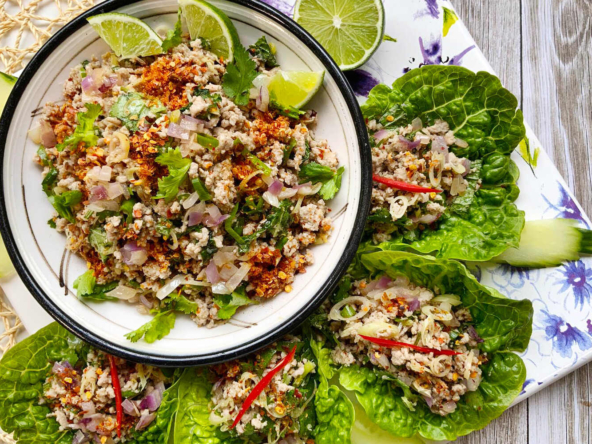
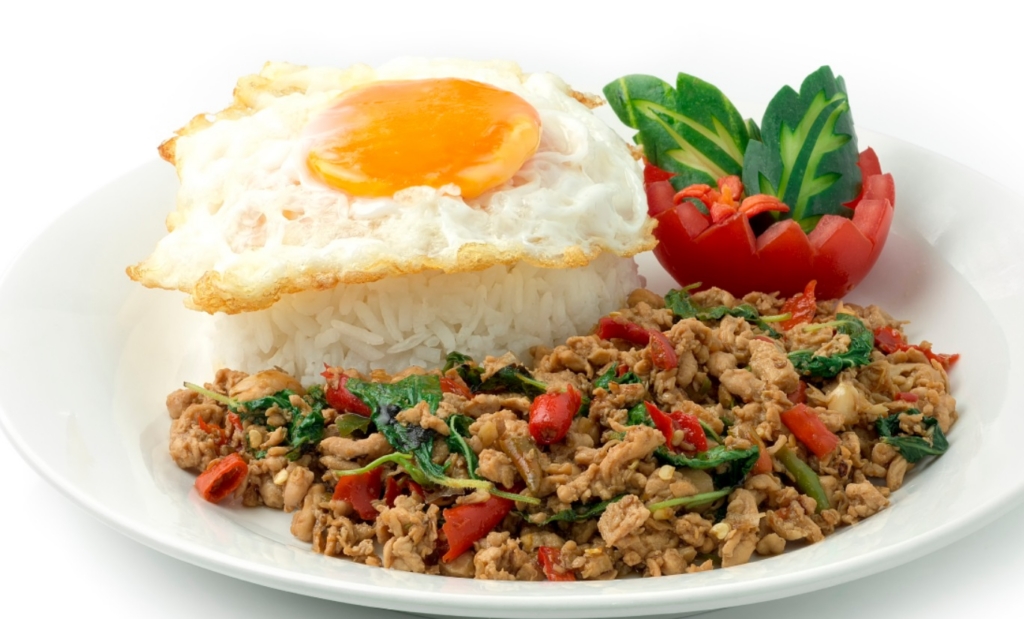
For those seeking a more authentic, everyday favorite that moves beyond the typical tourist path, Pad Kra Pao is a must-try. This stir-fry of minced meat usually pork or chicken with holy basil and chili is perhaps the most beloved “one-plate” meal in Thailand. Its appeal lies in its fragrant heat and comforting familiarity. The holy basil, which is distinct from the sweet basil used in curries, provides a peppery, almost clove like finish that defines the dish.
When served over rice and topped with a crispy-edged fried egg with a runny yolk, Pad Kra Pao becomes the ultimate comfort food. It represents the “everyday” side of Thai cuisine fast, intense, and deeply satisfying. It is the dish locals turn to when they want something that feels like home, and for travelers, it is often the discovery that makes them feel like they have finally stepped inside the true heart of Thai culture.
As guests become more comfortable with these flavors, the experience of enjoying them often shifts toward more intimate settings. There is a specific kind of magic that happens when these traditional favorites are prepared away from the noise of a restaurant. We have observed that many who visit Thailand find their most memorable meals occur in the quiet of a private space. Guests staying in stunning holiday villas across the islands or the lush countryside often have the opportunity to have their own private chef prepare these very dishes.
In these settings, the experience is tailored. The chef can adjust the spice levels to suit the group’s preference, ensuring the Tom Yum is exactly as tart or as fiery as desired. There is something profoundly special about watching a professional transform fresh, local market finds into a feast, served fresh at a private dinner table overlooking the ocean or a tropical garden.
Here, the idea that Thai cuisine is best appreciated slowly, in good company, becomes a reality. Each dish is allowed to complement the next, and the meal becomes a long, leisurely conversation rather than a hurried event.
Begin with the Classics, Discover the Culture
Thai food is not merely an assault of spice it is an invitation to experience balance and connection. It is a rhythmic dance of flavors that, once understood, reveals a culture that values harmony and hospitality above all else. We encourage every first-time diner to start with these well-loved dishes not as a checklist of famous foods, but as a way to learn the language of the Thai palate. Once these foundational dishes are understood, the menu no longer feels like a list of unfamiliar ingredients. Instead, it feels welcoming. The initial intimidation of the unknown fades away, replaced by the realization that every Thai meal is an opportunity to find balance in a complex world. Whether enjoyed at a bustling street stall or at a candlelit table in a private villa, these dishes serve as a bridge, turning a foreign cuisine into a lifelong favorite.
–
Featured Image by Asia King Travel